

What are stablecoins?
Stablecoins are a special type of cryptocurrency designed to mitigate the high volatility of traditional crypto assets like Bitcoin, or altcoins like Ethereum. They are typically pegged to the value of a fiat currency (e.g., US dollar) or other assets (e.g., gold), which helps maintain price stability. As a result, stablecoins are particularly popular for crypto trading and peer-to-peer transactions, and as a store of value in volatile markets.
Types of stablecoins
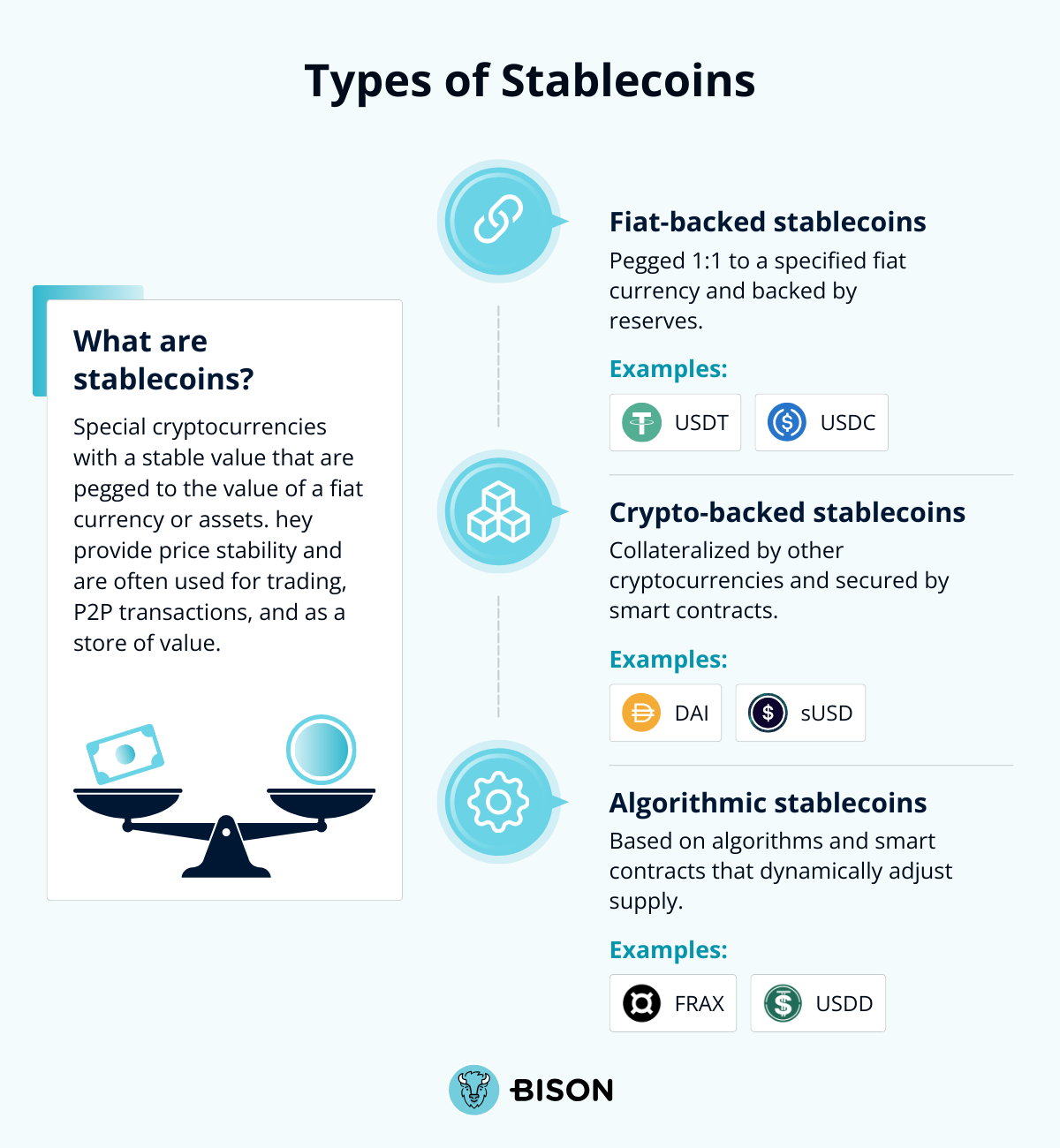
Stablecoins can be divided into three main categories:
- Fiat-collateralized stablecoins: These are pegged 1:1 to a fiat currency and backed by reserves. Examples: Tether (USDT), USD Coin (USDC), TrueUSD (TUSD).
- Crypto-collateralized stablecoins: These are backed by other cryptocurrencies and use smart contracts for collateralization. Examples: DAI (backed by Ethereum), sUSD.
- Algorithmic stablecoins: These are not backed by collateral but rely on algorithms and smart contracts that dynamically adjust the supply. Examples: TerraUSD (UST, now failed), FRAX.
List of well-known stablecoins
Here are some of the most well-known stablecoins currently in circulation:
- Tether (USDT) – The most widely used stablecoin, backed by fiat reserves.
- USD Coin (USDC) – A stablecoin issued by Circle and Coinbase with full transparency, pegged to the US dollar.
- DAI – A decentralized, crypto-collateralized stablecoin based on Ethereum.
- TrueUSD (TUSD) – A fiat-backed stablecoin with regular audits.
- Pax Dollar (USDP) – A regulated stablecoin, formerly known as Paxos Standard.
- Binance USD (BUSD) – A fiat-backed stablecoin issued by Binance.
- FRAX – An algorithmic stablecoin with partial collateral.
- sUSD – A crypto-collateralized stablecoin that is part of the Synthetix ecosystem.
The importance of stablecoins and regulatory aspects
Stablecoins are an essential component of the crypto ecosystem—they serve as a bridge between traditional financial and digital assets. In the European Union, stablecoins are regulated under the Markets in Crypto-Assets Regulation (MiCAR) to ensure greater transparency and investor protection.
Important regulatory requirements under MiCAR:
- Stablecoin issuers must demonstrate that their tokens are backed by sufficient reserves.
- Regular reporting and transparency requirements apply to all authorized stablecoins.
- Algorithmic stablecoins do not fall under the definition of e-money tokens and must meet specific requirements.
- Companies offering stablecoins must be registered and licensed by the competent authorities, such as BaFin in Germany.
These measures aim to strengthen market confidence and reduce the risk of liquidity issues or insufficient backing.
Stablecoins vs. altcoins – what’s the difference?
| Feature | Stablecoins | Altcoins |
|---|---|---|
| Definition | Cryptocurrencies with a stable value peg | Alternative cryptocurrencies besides Bitcoin |
| Price development | Low volatility; most are pegged 1:1 to fiat currencies | High volatility, strong price fluctuations |
| Examples | Tether (USDT), USD Coin (USDC), DAI | Ethereum (ETH), Cardano (ADA), Solana (SOL) |
| Use cases | Secure store of value, medium of exchange | Smart contracts, dApps, payments |
| Goal | Ensure stability in the crypto market | Innovation and the further development of blockchain technology |
Risks and challenges of stablecoins
Despite their advantages, stablecoins also carry certain risks:
- Regulatory uncertainty: While the EU has established a clear regulatory framework with MiCAR, uncertainties remain in other regions.
- Reserve backing: Investors should verify that a stablecoin is backed by sufficient reserves.
- Algorithmic stablecoins: The instability of TerraUSD (UST) has shown that algorithmic models without sufficient backing can be risky.
- Centralization: Many stablecoins are issued by centralized private companies, which may pose a risk if the issuing company encounters financial difficulties.